
 sales@nydcasting.com
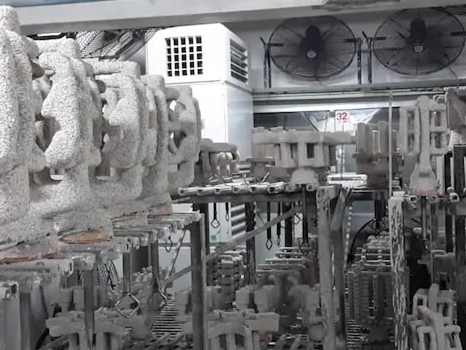
Silica sol investment casting uses fusible patterns and refractory materials to build mould shells. Before pouring molten metal, the patterns are melted out to form cavities for casting. Dating back over 3,000 years, this technique was initially adopted for manufacturing artworks. During World War II, driven by demand from the military industry, companies in the United States, Britain and other countries applied investment casting to produce static turbine blades for turbojet engines. This brought the technology into industrial applications, and it has seen continuous improvements over the past half-century.
Silica sol investment casting covers a long, interconnected production chain, including wax pattern fabrication, shell building, pouring and post-casting cleaning. Defects arising in any stage will directly compromise the formation and quality of final castings, which calls for stringent process control and continuous technical research.
1. Significance of the Shell-Making Process
Among all production procedures, wax pattern production and shell fabrication are the two most distinctive processes of investment casting and deserve focused research. Globally, remarkable progress has been achieved in wax pattern manufacturing in recent years. Manufacturers can select suitable pattern materials and deploy modern equipment to secure dimensional accuracy and surface finish of wax patterns.
Moreover, wax pattern production operates relatively independently from subsequent procedures. Operators can reject defective pieces through visual inspection and dimensional measurement, preventing unnecessary material and labour costs further down the line. In contrast, once production enters the shell-making stage, factors determining casting surface quality and dimensional accuracy become invisible until castings are stripped from shells. Changes inside shell cavities are like a “black box” during manufacturing, where dimensional variations and internal defects cannot be observed directly. Only by thoroughly understanding the correlation between shell-making parameters and casting defects can stable production be achieved.
More importantly, casting shells act as direct forming cavities for liquid metal, and their properties fundamentally govern the quality of cast components. For this reason, the shell-making process has always attracted widespread attention in investment casting communities. At the annual technical conference hosted by the Investment Casting Institute (ICI) in the United States — one of the world’s key investment casting forums — roughly one-third of published papers focus on shell technologies, demonstrating how critical shell fabrication is to industry advancement.
Thanks to environmental merits, silica sol shells have become the mainstream choice in international investment casting. Nevertheless, manufacturers face two major challenges amid fierce market competition. On one hand, aerospace and defence sectors demand larger, thinner-walled and more intricate castings with stricter quality standards. On the other hand, makers of civil castings are under growing pressure to shorten lead times and improve market responsiveness.
2. Demands for Advanced Silica Sol Materials Driven by Shell Technology Progress
2.1 Performance Requirements for Silica Sol Shells Used for Complex Investment Castings
Producing large, thin-walled and complex castings requires improvements in two areas. First, manufacturers need upgraded equipment tailored for large-scale shell production, such as automated shell-coating manipulators and specialised dewaxing furnaces. Second, finished shells must meet higher standards in overall strength, deformation resistance and dimensional stability. Strength and deformation resistance serve as the foundation for successfully forming large investment castings; only when these criteria are satisfied can manufacturers pursue precise dimensional control.
Depending on thermal exposure conditions, the strength of silica sol shells is categorised into green strength, high-temperature strength and residual strength. Green strength maintains shell integrity during shell building and dewaxing. High-temperature strength prevents shell rupture during preheating and metal pouring.
Testing shows that after firing above 950°C, silica sol shells reach a strength range of 7–14 MPa, exceeding the 6–8 MPa recorded for ethyl silicate shells. Such performance generally satisfies conventional investment casting requirements. However, higher high-temperature strength is usually accompanied by elevated residual strength, which makes shell removal more difficult after casting and must be properly balanced.
Compared with ethyl silicate shells, silica sol shells suffer from relatively low green strength. When fabricating large and complex shells, low green strength frequently causes cracking or deformation during shell coating and dewaxing, impairing casting surface quality and dimensional precision. Accordingly, enhancing the green strength of silica sol remains a key priority for advancing silica sol shell technology and developing new-generation silica sol binders.
2.2 Requirements for Silica Sol Innovation to Improve Production Efficiency
Civil castings usually carry less stringent quality specifications than aerospace components, yet shortening production cycles and boosting throughput are far more urgent for civilian production lines. Conventional silica sol relies on water evaporation for gelation, which takes considerably longer than the chemical hardening mechanism used for ethyl silicate shells.
Ethyl silicate shells can achieve full hardening within approximately two hours per layer using ammonia curing. In comparison, full hardening of each silica sol layer normally takes over 12 hours; drying takes even longer for deep holes and recessed areas with poor ventilation. In addition, shells are built layer by layer. Each fresh coating introduces moisture that may rewet previously dried layers. Sufficient drying time for every single layer is essential to avoid interlayer peeling, which extends the overall manufacturing cycle significantly.
In practical production, shell-making accounts for more than 50% of the total lead time for investment castings. Shortening shell production cycles holds the key to faster delivery. Two groups of factors determine drying efficiency: internal factors related to the inherent characteristics of silica sol binders, and external factors consisting of on-site drying environments.
We provide integrated services ranging from mould development to finished precision casting production, supporting joint process development and customised manufacturing. Committed to supplying high-quality precision castings for China’s advanced manufacturing industry, we welcome enquiries regarding investment casting technology and custom casting projects.