
 sales@nydcasting.com
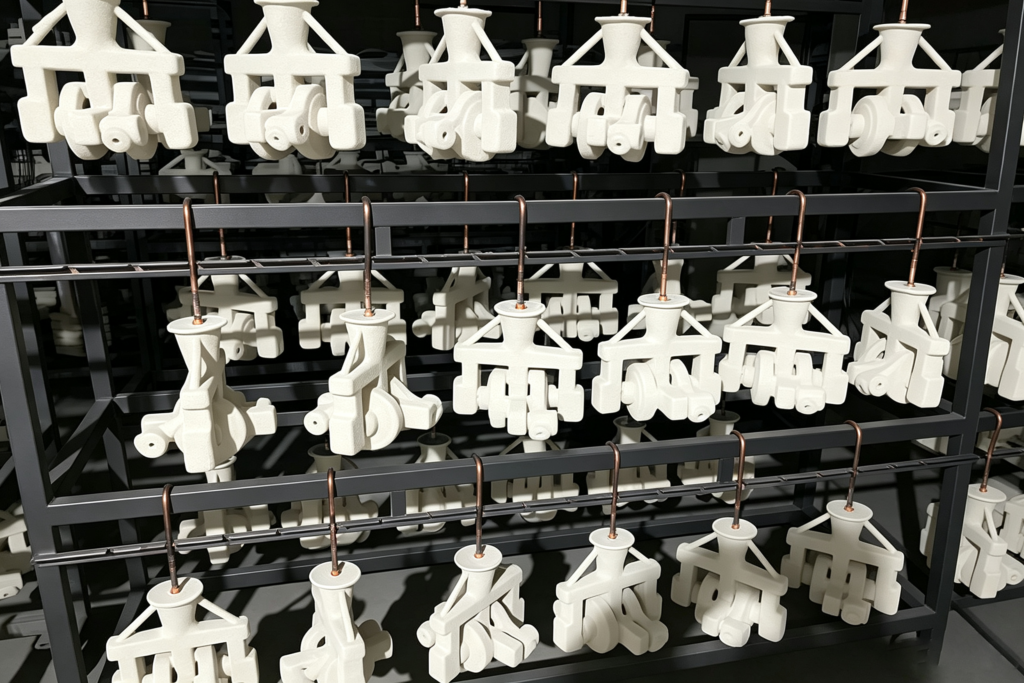
The production of cast iron parts essentially boils down to three steps:
Melting iron into liquid → Pouring the liquid into a mold → Cooling to form the shape
All other processes revolve around the precise control of these three steps.
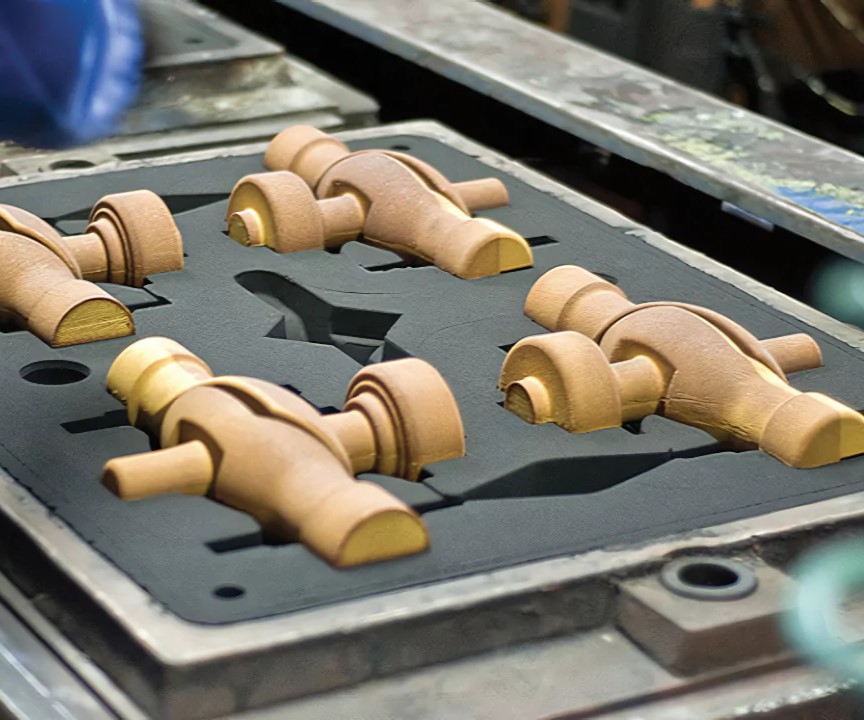
I. Molding—”Drawing” the shape for the molten iron
A wooden or metal pattern—identical in shape to the final product—is used to create a cavity within a sand box by repeatedly filling and compacting sand around it. This cavity serves as the “house” where the molten iron will reside.
The material used is “green sand” (moist molding sand); it is low-cost, reusable, and the most common molding material in the casting industry.
The mold determines the shape of the casting, much like a cookie cutter determines the shape of a cookie.
II. Melting—Turning solid iron into liquid molten iron
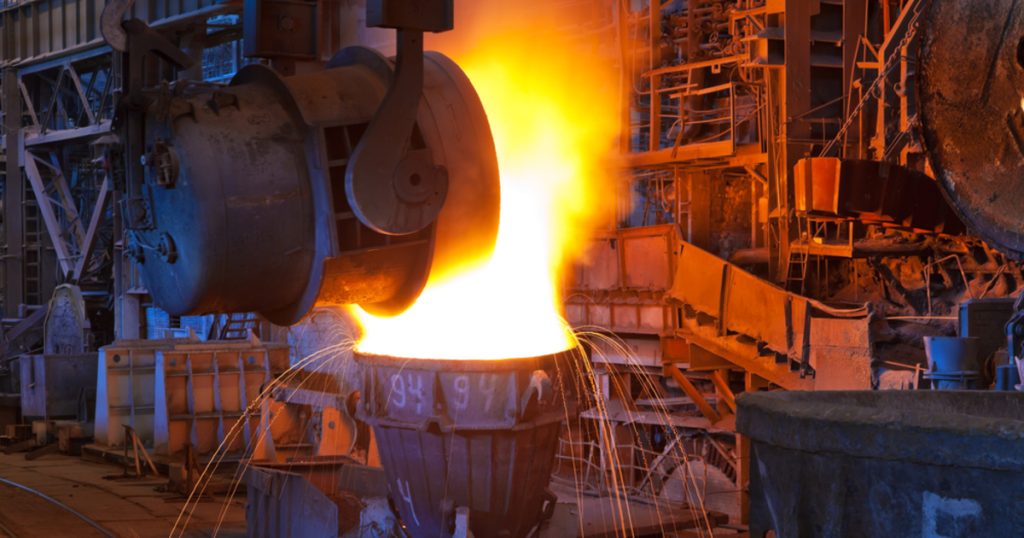
Raw materials such as pig iron, scrap steel, and ferroalloys are placed in a medium-frequency induction furnace and heated to 1400°C–1500°C until completely melted into molten iron.
The medium-frequency electric furnace is currently the most widely used melting equipment in foundries. Compared to traditional cupola furnaces, it offers more precise temperature control, more stable chemical composition, lower energy consumption, and reduced pollution.
Melting requires precise control over two factors: chemical composition (the ratios of elements like carbon, silicon, and manganese) and temperature. These two parameters directly determine the final hardness and strength of the casting.
Melting is like cooking—if the recipe is wrong, the final result won’t be right.
III. Pouring—Pouring the molten iron into the “house”
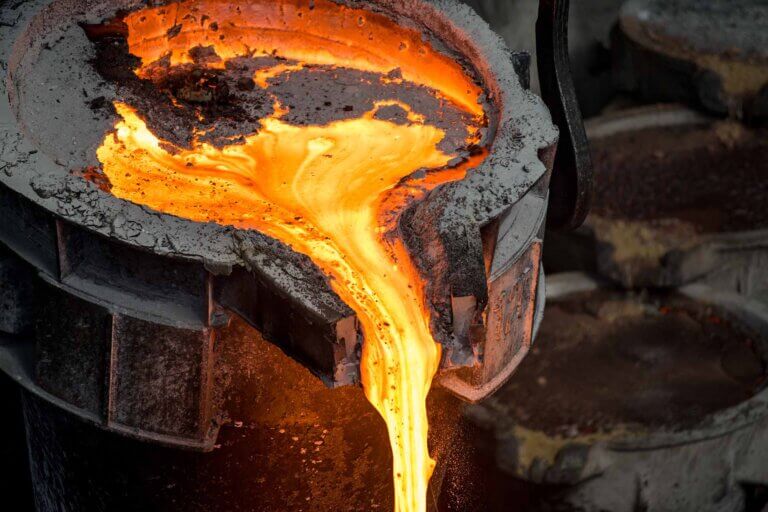
A ladle is used to scoop up the high-temperature molten iron and pour it steadily into the cavity of the sand mold through the pouring gate.
There are three keys to the pouring process:
Correct temperature—If the temperature is too low, the molten iron won’t flow well and will fail to fill the mold cavity; if it is too high, sand adhesion becomes a problem. Generally, the pouring temperature is controlled between 1380°C and 1450°C.
Steady speed—Pouring too fast can damage the sand mold, while pouring too slowly allows the molten iron to cool, preventing proper fusion. Proper pouring requires a “slow–fast–slow” rhythm.
The flow must not be interrupted—any break in the stream can lead to slag inclusions or “cold shut” defects.
Pouring is like pouring beer into a glass: it must be steady and continuous, without spilling.
IV. Cooling and Solidification—The molten iron “goes to sleep” and turns solid
The molten iron settles into the sand mold and cools gradually, transitioning from a liquid to a solid state.
The cooling rate is crucial:
Cooling too fast—the casting is prone to cracking, and the surface skin becomes excessively hard.
Cooling too slow—grain growth becomes too coarse, reducing mechanical properties.
Uneven cooling—internal stresses develop within the casting, making it prone to deformation during subsequent machining.
Cast iron has a unique advantage during solidification: graphitization expansion. As graphite precipitates during solidification, it expands in volume; this expansion offsets the metal’s contraction, thereby reducing shrinkage porosity defects.
Cooling is not merely a matter of “freezing”; the cooling rhythm determines the quality of the casting’s internal microstructure.
V. Shakeout and Cleaning—”Digging” the casting out of the sand
Once the molten iron has cooled completely, the flask is opened, and the casting is removed from the molding sand.
The raw casting fresh out of the mold still carries sand, burrs, and gating/riser systems (channels for excess molten iron used during pouring), so it requires cleaning:
Physical cleaning—shot blasting or sandblasting; using high-speed steel shot to clean the surface.
Removing gating and risers—cutting off excess metal using gas cutting or mechanical methods.
The raw casting is like a freshly baked cookie with rough edges; it needs trimming before it is ready for use.
VI. Heat Treatment—Not required for every piece, but vital when needed
Heat treatment is not a mandatory process for all cast iron parts. Most standard cast iron parts are ready for use immediately after casting; heat treatment is required only in specific situations.
When is it necessary?
Stress-relief annealing—For castings with significant machining allowances, this prevents deformation during machining. The part is typically heated to 500°C–550°C, held at that temperature for several hours, and then cooled slowly. This process eliminates 90%–95% of internal stresses.
Graphitizing annealing—If a casting cools too rapidly and develops a “white iron” layer (a hard, brittle microstructure) on the surface, it is heated to between 550°C and 950°C to eliminate this layer.
Surface hardening—For parts requiring enhanced wear resistance, such as cylinder liners and guide rails.
Think of heat treatment as sending the casting back to the furnace for “further refinement”—it is not mandatory, but rather an optional step taken based on specific performance requirements.

VII. Inspection and Machining—The Final Gatekeeper Before Shipment
Inspection acts as the goalkeeper—defective castings must never leave the factory.
Inspection takes place at several levels:
Visual inspection—Checking for obvious surface defects such as cracks or sand holes.
Dimensional inspection—Using measuring tools or a Coordinate Measuring Machine (CMM) to verify that dimensions fall within tolerance limits.
Non-destructive testing (NDT)—Using methods like ultrasonic testing, magnetic particle inspection, or radiography to check for internal defects such as shrinkage cavities or gas porosity.
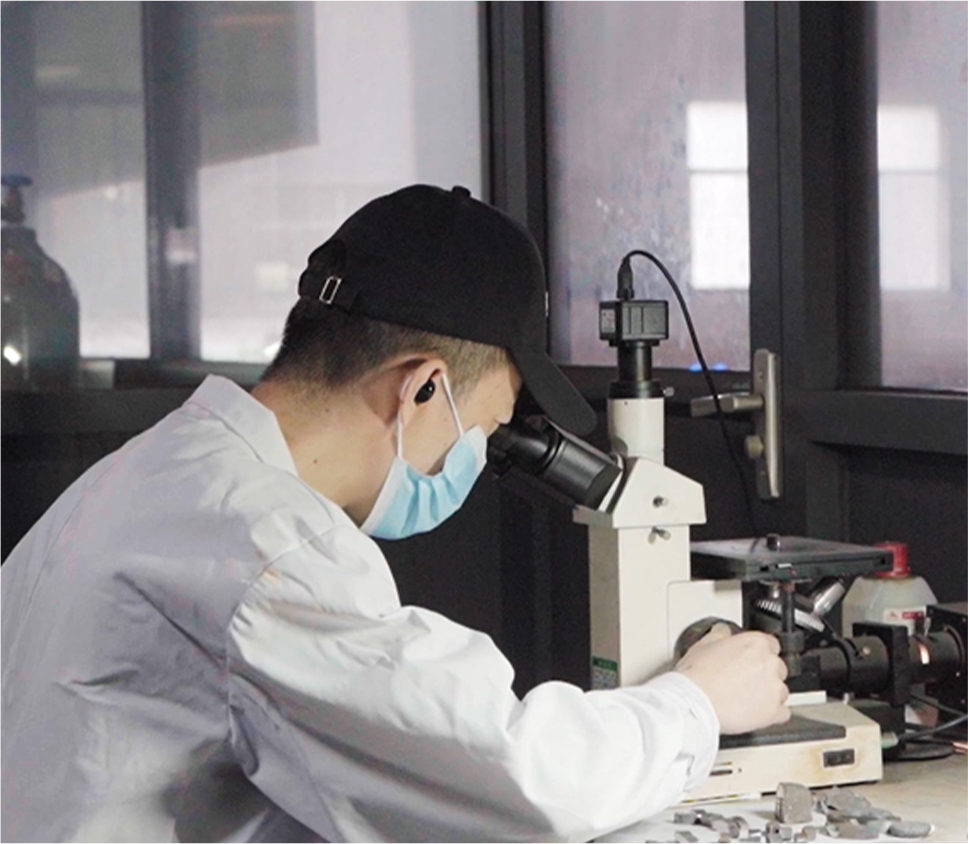
Performance testing—Measuring tensile strength and hardness, and verifying that the microstructure meets specifications.
Once the casting passes inspection, precision machining is performed on features such as bearing seats, holes, and end faces in accordance with the customer’s drawings, ensuring the final assembly dimensions are achieved.
In Conclusion
Cast iron parts may appear rugged, but every step of their production involves precision work.
From mold accuracy, molten iron temperature, pouring speed, and cooling rates to the thoroughness of cleaning, precise control of heat treatment, and rigorous inspection—every stage involves managing invisible physical and chemical principles.
As a professional supplier of cast iron parts, we do more than just “turn molten iron into parts”; more importantly, we control the process parameters at every step to achieve the optimal balance of performance, dimensions, and cost.